- Table Stakes
- Posts
- Table Stakes - February 2nd
Table Stakes - February 2nd

Atlas News
February 02, 2026
Good morning everyone,
I’m Atlas, and welcome to Table Stakes!
Here’s a look at today’s topics:
Trump Seeks Diplomacy Through Possible Iran Deal To Avoid War
Pakistan Claims State Forces Neutralized 145 Militants
Trilateral Talks To Take Place This Week For End To Russia-Ukraine War
Trump Seeks Diplomacy Through Possible Iran Deal To Avoid War
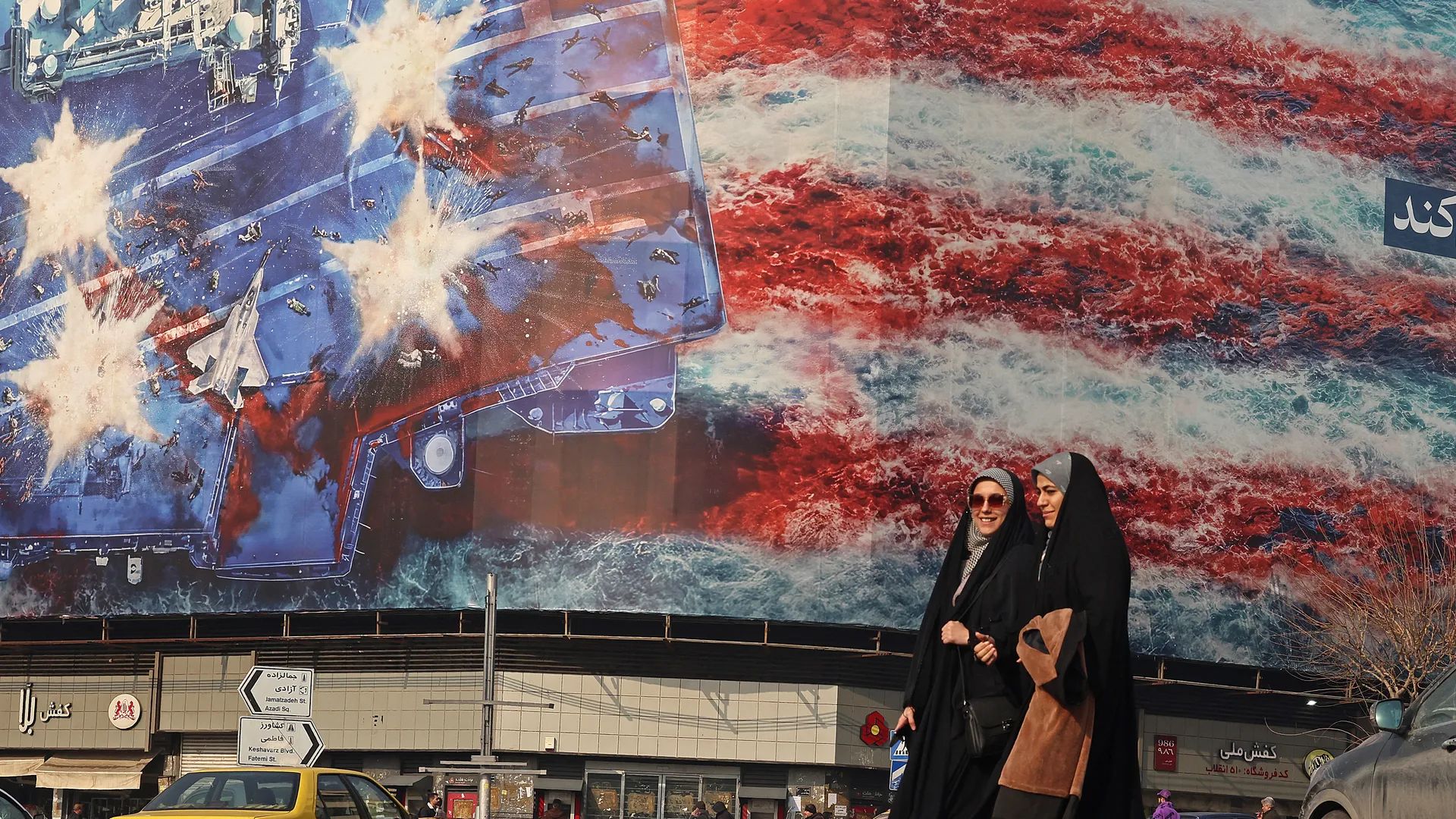
Iranian women walk past billboard adversarial to the U.S. Enqelab Square, Tehran on January 26th 2026 (Atta Kenare - AFP)
By: Atlas
President Donald Trump said Saturday that Iran is engaged in negotiations with the United States, offering the disclosure as a sign that military strikes on the Islamic Republic could be averted even as American warships continue to mass in the region.
"You could make a negotiated deal that would be satisfactory with no nuclear weapons," Trump told reporters. "They should do that, but I don't know that they will. But they are talking to us. Seriously talking to us."
The comments came hours before Iran's Supreme Leader Ayatollah Ali Khamenei delivered his most direct warning yet to Washington, saying Sunday that any American attack would trigger a wider conflict across the Middle East.
"The Americans must be aware that if they wage a war this time, it will be a regional war," Khamenei said during a speech in Tehran commemorating the 1979 Islamic Revolution. "We are not the instigators, we are not going to be unfair to anyone, we don't plan to attack any country. But if anyone shows greed and wants to attack or harass, the Iranian nation will deal a heavy blow to them."
Trump Responds to Khamenei's Warning
Asked about Khamenei's remarks on Sunday, Trump appeared unfazed. "Of course he would say that," the president told reporters.
"But we have the biggest, most powerful ships in the world over there, very close, couple of days, and hopefully we'll make a deal," Trump continued. "If we don't make a deal, then we'll find out whether or not he was right."
Trump declined to say whether he had made a final decision on military action against Iran. When asked if Tehran would be emboldened if the United States backed away from launching strikes, he responded: "Some people think that. Some people don't."
The exchange marked the latest escalation in rhetoric between Washington and Tehran as the U.S. military buildup in the region continues. Trump has threatened military action over Iran's bloody crackdown on nationwide protests that began in late December, initially sparked by the collapse of Iran's rial currency before growing into a direct challenge to Khamenei's rule.
Military Forces Converge on the Region
The aircraft carrier USS Abraham Lincoln and its associated strike group are currently positioned in the Arabian Sea, sent by Trump after Iran's violent suppression of demonstrations. The president described the deployment last week as "a massive armada" that was "ready, willing, and able to rapidly fulfill its mission, with speed and violence, if necessary."
Iran's military leadership responded with its own warnings. General Amir Hatami, the regular army's commander-in-chief, said Iranian forces were closely watching American movements.
"They are under complete surveillance by us," Hatami said. "And since we are aware of their evil intentions, our fingers are on the trigger. If they make a mistake, without doubt they will endanger their security, the security of their forces, the security of the region, and the security of the criminal Zionist regime."
Ali Shamkhani, a senior adviser to Khamenei, warned that any response to American military action would be sweeping. "Any military action by the United States, from any location and at any level, will be considered the start of a war," Shamkhani said. "The response will be immediate, comprehensive and unprecedented. The aggressor, the heart of Tel Aviv and all those who support the aggressor will be targeted."
Iran had reportedly planned a live-fire military drill for Sunday and Monday in the strategic Strait of Hormuz, the narrow passage through which a fifth of all oil traded globally passes. The U.S. military's Central Command warned against threatening American warships or aircraft during any such exercises or disrupting commercial traffic. However, an Iranian official later told reporters that media reports about the planned exercises were incorrect and that no official announcement had been made.
Diplomatic Channels Remain Open
Despite the heated rhetoric, signs of diplomatic activity have emerged. Ali Larijani, head of Iran's Supreme National Security Council, wrote on social media Saturday that "structural arrangements for negotiations are progressing."
Qatar's premier and foreign minister, Sheikh Mohammed bin Abdulrahman al-Thani, traveled to Tehran on Saturday for talks with Larijani aimed at reducing tensions in the region. The Qatari foreign ministry said he reiterated Qatar's support for "all efforts aimed at reducing tensions."
But significant obstacles remain. The two sides appear to disagree fundamentally on what can and should be negotiated. Tehran has indicated willingness to resume talks on its nuclear weapons program, while the Trump administration has insisted that Iran also limit the range and capabilities of its ballistic missiles.
Iran has rejected any discussion of its missile arsenal, viewing it as essential to its defense in the event of enemy attack. Israel, meanwhile, has not been asked to make similar concessions regarding its own missile program.
Khamenei, 86, has repeatedly ruled out direct talks with the United States. Trump pulled the U.S. from the Iran nuclear deal in 2018 during his first term. That agreement had offered Iran relief from sanctions in exchange for limiting its nuclear program.
Protests and Red Lines
The current tensions stem in part from Iran's crackdown on demonstrations that have swept the country since late December. The U.S.-based Human Rights Activists News Agency, which relies on a network inside Iran, reports that over 49,500 people have been detained and at least 6,713 killed, the vast majority of them demonstrators.
Iran's government disputes those figures, putting the death toll at 3,117 as of January 21.
Trump has established two red lines for military action: the killing of peaceful protesters or the mass execution of those detained. The president said in January that he believed it was "time to look for new leadership in Iran."
Khamenei on Sunday hardened his position on the demonstrations, describing them as "a coup" that had been suppressed. "Their goal was to destroy sensitive and effective centers involved in running the country," he said, "and for this reason they attacked the police, government centers, Revolutionary Guard facilities, banks and mosques—and burned copies of the Quran."
The U.S. bombed three Iranian nuclear sites during a 12-day war between Israel and Iran last June. Activity at two of those sites suggests Iran may be attempting to obscure satellite imagery as it tries to salvage what remains.
Trump referenced those strikes in his warning to Tehran last week: "The next attack will be far worse!"

Subscribe to Table Stakes to read the rest.
Every Monday Morning, get a recap of the week’s events from countries on the main stage. Featuring news & analysis into new policy, military affairs, and international relations on the worlds stage.
Already a paying subscriber? Sign In.
A subscription gets you:
- • Lifetime Rizz
Reply