- Table Stakes
- Posts
- Table Stakes - March 16th
Table Stakes - March 16th

Atlas News
March 16, 2026
Good morning everyone,
I’m Atlas, and welcome to Table Stakes!
Here’s a look at today’s topics:
Sec. Bessent Leads Talks With China On Trade Ahead of Trump-Xi Meeting
U.S. Invokes Defense Production Act To Restore Oil Operations In California
Trump Calls On Coalition Of Countries To Open Hormuz
Sec. Bessent Leads Talks With China On Trade Ahead of Trump-Xi Meeting
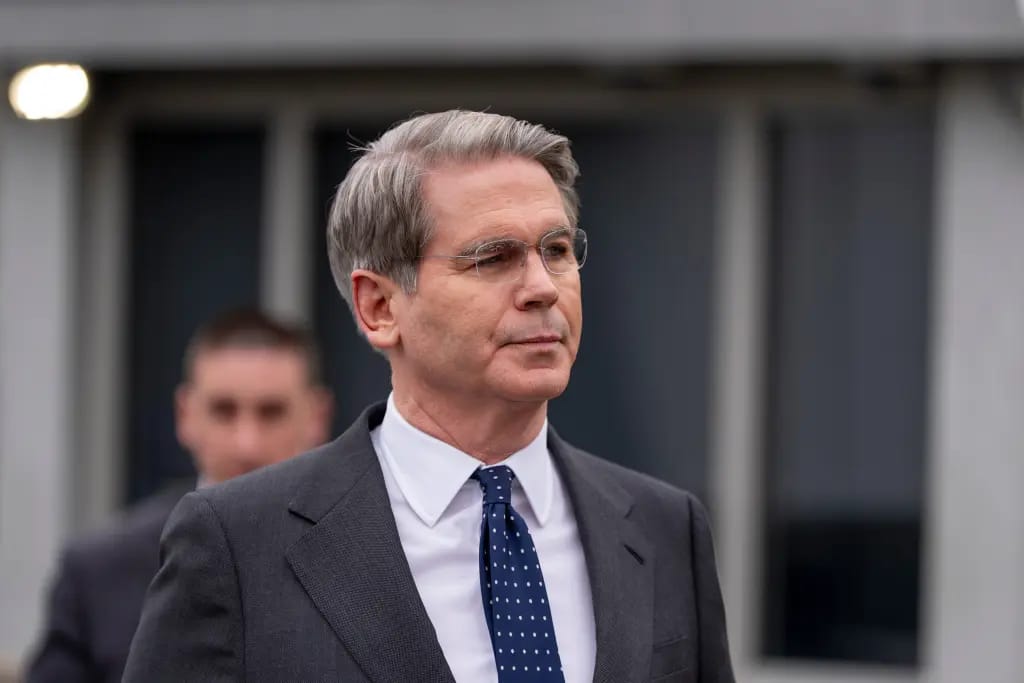
U.S. Treasury Secretary Scott Bessent (AP)
By: Atlas
Treasury Secretary Scott Bessent and U.S. Trade Representative Jamieson Greer sat down Sunday with Chinese Vice Premier He Lifeng at the headquarters of the Organisation for Economic Co-operation and Development in Paris, opening a two-day round of trade negotiations that both governments are treating as the last major preparatory session before President Donald Trump travels to Beijing at the end of the month.
The first day of talks began at 10:05 a.m. local time, broke for lunch, resumed at around 2:15 p.m., and concluded at 6:02 p.m., when the Chinese delegation departed without speaking to reporters. Neither side issued a public statement on the substance of the day's discussions. The talks are set to continue Monday before the U.S. delegation departs. The White House has confirmed Trump will visit China from March 31 to April 2 — the first trip by an American president to Beijing in nearly a decade — though Beijing has not officially confirmed the dates, consistent with its standard diplomatic practice.
He was accompanied by Vice Commerce Minister Li Chenggang, China's top international trade negotiator, and Vice Finance Minister Liao Min. The combination of economic and trade officials on both sides signals that the Paris sessions are meant to produce concrete proposals for the two leaders to consider, not simply to open a channel of dialogue.
What's on the Table
Two sources familiar with the talks described the first day's atmosphere to Reuters as "remarkably stable" and "candid and constructive." The sources said discussions touched on agriculture, critical minerals, and the potential establishment of formal bilateral trade management structures — two proposed bodies that have been designated internally as a "Board of Trade" and a "Board of Investment."
The Board of Trade, described as the more developed of the two proposals, would be aimed at identifying sectors where the U.S. and China could expand trade in a balanced way without compromising each other's national security or critical supply chains. The Board of Investment would deal with discrete investment disputes as they arise, rather than setting broad investment policy.
On agriculture, the Chinese side showed openness to purchasing additional U.S. farm goods — including poultry, beef, and non-soybean row crops — beyond what is already committed. China remains committed to buying 25 million metric tons of American soybeans annually for each of the next three years, one of the sources said.
U.S. officials pressed the Chinese delegation on Boeing jetliner purchases and American coal, oil, and natural gas exports, which could be taken up further on Monday. Bessent and Greer also raised the issue of yttrium, a rare earth element used in jet engine turbines, flagging a shortage of access for the U.S. aerospace industry. The sources said the two sides "found some ways to loosen up" on some of the more difficult critical minerals questions but offered no specifics.
Bessent said Thursday, announcing the talks, that his team would "continue to deliver results that put America's farmers, workers, and businesses first." Greer, speaking before departing for Paris, said the goal was stability. "Like a lot of our meetings we've had with the Chinese over the past year, we want to ensure continued stability in the U.S.-China relationship," he told CNBC on Thursday. "We want to make sure that we continue to get the rare earths we need for our manufacturing base, that they keep buying the kinds of things they should be buying from us."
The Iran Factor
The Paris talks are unfolding against the backdrop of the ongoing U.S.-Israeli war against Iran, now in its third week, which has sent oil prices above $100 a barrel and effectively closed the Strait of Hormuz to commercial traffic. Iran's closure of the strait is a particular pressure point for China, which receives roughly 45 percent of its oil through that waterway.
Trump on Saturday urged China, France, Japan, South Korea, and the United Kingdom to send warships to keep the Strait of Hormuz "open and safe." Washington also struck Kharg Island — Iran's primary oil export terminal — in what the administration described as a targeted military operation against Iranian energy infrastructure used to fund the regime's war effort.
Beijing has condemned the killing of Ayatollah Ali Khamenei and criticized the broader U.S.-Israeli campaign, while also expressing displeasure at Iranian strikes against Gulf Arab states. That dual posture has left China in an uncomfortable position: opposed to the war in principle, but not in a position to absorb an indefinite disruption to its energy supply.
Gary Ng, a senior economist at Natixis and research fellow at the Central European Institute of Asian Studies, said the Iran conflict adds a new layer of complexity to negotiations that are already dense with unresolved issues. "Iran is a new factor, but Beijing is more concerned about the flip-flopping of U.S. policies," Ng said before the talks began. The key question, he said, is "whether China and the U.S. can agree on what is agreed and manage disagreement."
A Fraught Legal Backdrop
Sunday's session was also the first time the two delegations have met since the U.S. Supreme Court struck down Trump's sweeping global tariffs, which had been imposed under the International Emergency Economic Powers Act and had threatened levies as high as 145 percent on Chinese goods. The court ruled Trump lacked the statutory authority to use that mechanism.
In response, the administration imposed a flat 10 percent across-the-board tariff under Section 122 of the Trade Act of 1974, which can remain in effect for 150 days. Greer's office has since launched two additional investigations under Section 301 — one targeting industrial overcapacity among 16 trading partners including China, announced March 11, and a second, announced March 13, examining whether 60 economies have done enough to eliminate forced labor from their export supply chains.
China's commerce ministry pushed back on both probes, calling on Washington to resolve concerns through dialogue and reserving "the right to take all necessary measures to safeguard its rights and interests." The ministry said the Paris talks would cover "economic and trade issues of mutual concern" without specifying further.
The current Paris session is the sixth round of high-level bilateral trade negotiations since Bessent and He first met in Geneva in May 2025. Subsequent meetings followed in London, Stockholm, Madrid, and Kuala Lumpur — a run of sessions that produced the November truce under which both sides reduced tariffs and eased export restrictions. That truce was later formalized at the Trump-Xi summit in Busan, South Korea, in October 2025.
Scott Kennedy, a China economics specialist at the Center for Strategic and International Studies, was measured in his expectations for Paris. "Both sides, I think, have a minimum goal of having a meeting, which sort of keeps things together and avoids a rupture and re-escalation of tensions," he said.

Subscribe to Table Stakes to read the rest.
Every Monday Morning, get a recap of the week’s events from countries on the main stage. Featuring news & analysis into new policy, military affairs, and international relations on the worlds stage.
Already a paying subscriber? Sign In.
A subscription gets you:
- • Lifetime Rizz
Reply