- Table Stakes
- Posts
- Table Stakes - March 23rd
Table Stakes - March 23rd

Atlas News
March 23, 2026
Good morning everyone,
I’m Atlas, and welcome to Table Stakes!
Here’s a look at today’s topics:
Cuba Gov To Trump: Our Military Is Prepared
French Elections Yield Mixed Results For Socialist & Right Wing Parties
ICE Agents Installed At Airports As Gov. Shutdown Lingers
Cuba Gov To Trump: Our Military Is Prepared
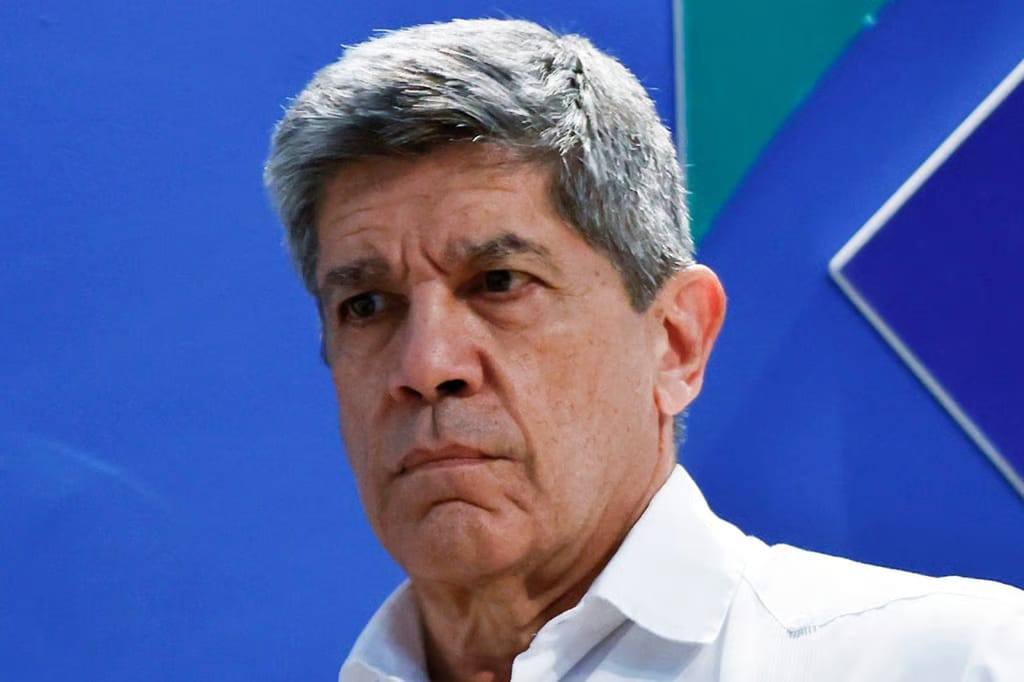
Cuban Deputy Foreign Minister Carlos Fernandez de Cossio (EPA)
By: Atlas
Cuba's deputy foreign minister said Sunday that the island's military is actively preparing for the possibility of a U.S. military attack, the most direct public acknowledgment yet that Havana is treating American threats as something more than political noise.
"Our military is always prepared," Deputy Foreign Minister Carlos Fernández de Cossío said in an interview on NBC's Meet the Press. "And in fact it is preparing these days for the possibility of military aggression. We would be naive if, looking at what's happening around the world, we did not do that. But we truly hope that it doesn't occur."
Fernández de Cossío declined to provide specifics on what those preparations entailed. He also sought to frame the military readiness as precautionary rather than anticipatory, adding that Cuba has "historically been ready to mobilize, as a nation as a whole, for military aggression" and that Havana does not see an attack as probable. "We don't see why it would have to occur and we find no justification whatsoever," he said.
The remarks came days after President Donald Trump escalated his rhetoric toward Cuba in Oval Office comments. "I do believe I'll be having the honor of taking Cuba," Trump told reporters. "Whether I free it, take it — I think I could do anything I want with it." Cuban President Miguel Díaz-Canel had separately warned earlier in the week that any attempt to force a leadership change would meet with "impregnable resistance."
The Pentagon's Position
While Cuba is raising its military posture publicly, the top American commander for Latin America told lawmakers on Thursday that the U.S. military is not rehearsing an invasion or actively preparing to take over the island.
Gen. Francis Donovan, the head of U.S. Southern Command, said current planning is focused on three specific contingencies: protecting the U.S. Embassy in Havana, defending the naval base at Guantanamo Bay, and supporting the Department of Homeland Security in the event of a large-scale migration crisis from Cuba.
That assessment draws a sharp contrast with the tone coming from Trump and Secretary of State Marco Rubio, who have both suggested Cuba's leadership is running out of road. Rubio said last week that Cuba's rulers "don't know how to fix" the country and that the concessions Havana has offered — releasing a small number of political prisoners and proposing to open the economy to investment from Cuban Americans abroad — were "not dramatic enough."
Blackouts, Blockade, and the Energy Crisis
The backdrop to the diplomatic standoff is an island in acute economic distress. Cuba has suffered at least seven nationwide power outages since 2024, including two complete grid collapses in a single week in mid-March. Saturday's blackout came while Fernández de Cossío's interview had already been taped. By Sunday afternoon, two-thirds of Havana had power restored, the capital's electricity company confirmed. Prime Minister Manuel Marrero Cruz announced late Sunday on social media that the National Electric System had been restored, but authorities cautioned that demand would still exceed supply.
No oil has been imported to Cuba since January 9, following Trump's threat to impose tariffs on any country that exports fuel to the island. Cuba has relied heavily on Venezuelan oil since Hugo Chávez came to power in 1999, with Caracas subsidizing the Cuban economy through below-market energy deliveries for more than two decades. That supply ended when U.S. special forces captured then-Venezuelan President Nicolás Maduro on January 3, after which the interim government of Delcy Rodríguez agreed to halt shipments to Cuba as part of its cooperation with Washington.
Cuba produces roughly 40 percent of its own petroleum but cannot generate enough to meet domestic demand. LSEG ship-tracking data reviewed earlier this month showed Cuba received only two small vessels carrying oil imports this year — one fuel delivery from Mexico in January and a liquefied petroleum gas shipment from Jamaica in February.
Fernández de Cossío called the fuel situation "very severe" and accused the United States of threatening other countries "with coercive measures" to prevent them from exporting oil to Cuba. "We do hope that fuel will reach Cuba one way or the other and that this boycott that the United States has been imposing does not last and cannot be sustained forever," he said.
The Lines Cuba Is Drawing
Despite the ongoing dialogue between Havana and Washington — confirmed by both sides and led on the U.S. side by Secretary Rubio — Fernández de Cossío made clear Sunday that Cuba has drawn firm lines on what is and is not negotiable.
Regime change is off the table. "The nature of the Cuban government, the structure of the Cuban government, and the members of the Cuban government are not part of the negotiation," he said. The release of political prisoners, a central U.S. demand, is also not on Cuba's agenda for the bilateral talks. "We are in dialogue with the United States to talk about bilateral issues," Fernández de Cossío said. "We're not talking about prisoners."
Cuba's ambassador to the United Nations, Ernesto Soberón Guzmán, separately told Bloomberg that his country would not remove Díaz-Canel to satisfy American demands. "Cuba is a sovereign country and has the right to be a sovereign country and has the right to self-determination," Fernández de Cossío added. "Cuba would not accept to become a vassal state or a dependent state from any other country or any other superpower."
He also pushed back on Rubio's assertion that the Cuban government would collapse "on its own," pointing to the resources Washington has directed at pressuring the island as evidence that a natural collapse is not what U.S. officials actually believe is happening. "Why does the U.S. government need to employ so many resources, so much political capital, so many human resources, to try to destroy the economy of another country?" he asked. "Evidently, it implies that the country does not have the characteristics to collapse on its own."
Cuba "is not in a state of collapse," he said. "We're being as creative as possible."
Trump has previously told reporters aboard Air Force One that he intends to turn his attention to Cuba after wrapping up the Iran war. His administration has not been more specific than that about the timeline or the methods it would consider.

Subscribe to Table Stakes to read the rest.
Every Monday Morning, get a recap of the week’s events from countries on the main stage. Featuring news & analysis into new policy, military affairs, and international relations on the worlds stage.
Already a paying subscriber? Sign In.
A subscription gets you:
- • Lifetime Rizz
Reply