- Table Stakes
- Posts
- Table Stakes - March 30th
Table Stakes - March 30th

Atlas News
March 30, 2026
Good morning everyone,
I’m Atlas, and welcome to Table Stakes!
Here’s a look at today’s topics:
Pakistan Hosts Regional Powers For Talks On Iran War
Israeli PM Orders Military Expansion Deeper Into Southern Lebanon
DHS Enters 45th Day Of Shutdown, The Longest In History
Pakistan Hosts Regional Powers For Talks On Iran War
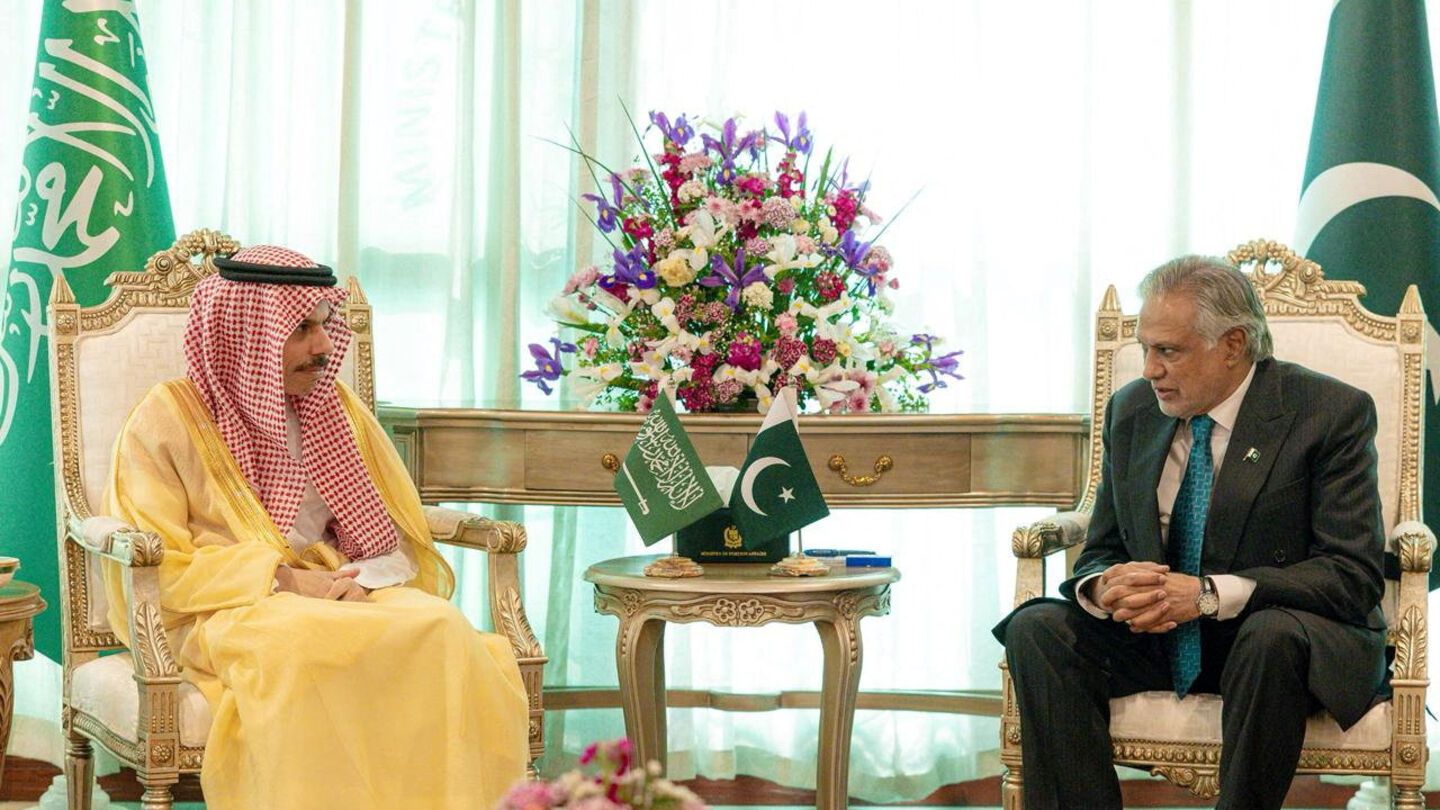
Saudi Foreign Minister Faisal bin Farhan al Saud meets Pakistan's Deputy Prime Minister and Minister for Foreign Affairs Senator Mohammad Ishaq Darin Islamabad, Pakistan, March 29, 2026. (Saudi Press Agency)
By: Atlas
Pakistan convened foreign ministers from Turkey, Saudi Arabia, and Egypt in Islamabad on Sunday for two days of talks aimed at brokering an end to the war in Iran and restoring shipping through the Strait of Hormuz. The gathering represents the most concentrated diplomatic effort by regional powers since the U.S.-Israeli air campaign began a month ago, and it positions Islamabad as the primary intermediary between Washington and Tehran in a conflict that has killed more than 3,000 people and sent global energy markets into turmoil.
Pakistani Foreign Minister Ishaq Dar said after the first day of discussions that the ministers had covered "possible ways to bring an early and permanent end to the war in the region" and had been briefed on potential direct U.S.-Iran negotiations in Islamabad. He said all sides had expressed confidence in Pakistan's role as a mediator and added that China "fully supports" the initiative.
"Pakistan will be honored to host and facilitate meaningful talks between the two sides in coming days, for a comprehensive and lasting settlement of the ongoing conflict," Dar said in a video statement posted on X.
It was not immediately clear whether the United States or Iran had agreed to attend any such talks. Iran has publicly denied that direct negotiations with Washington are taking place, though President Trump has repeatedly claimed otherwise.
Hormuz Proposals Take Center Stage
The first day of discussions focused heavily on the Strait of Hormuz, the narrow waterway through which roughly one-fifth of the world's oil and liquefied natural gas supply used to flow before Iran effectively shut it down in retaliation for the strikes that began February 28.
Sources familiar with the talks said the participating countries have floated several proposals tied to restoring maritime traffic through the strait. One Pakistani source said Egypt had forwarded proposals to the White House before Sunday's meeting that included Suez Canal-style fee structures — essentially a toll system for vessels transiting the waterway.
Two additional Pakistani sources said Turkey, Egypt, and Saudi Arabia could form a management consortium to oversee oil flows through the strait and had asked Pakistan to participate. The first source said Islamabad had not been formally asked to join and maintains that it will not.
The consortium proposal has reportedly been discussed with both the United States and Iran. Pakistan's army chief, Field Marshal Asim Munir, has been in regular contact with U.S. Vice President JD Vance throughout the crisis, sources said.
A Turkish diplomatic source said Ankara's immediate priority was securing a ceasefire, adding that "ensuring the safe passage of ships could serve as an important confidence-building measure in this regard."
Dar separately announced that Iran had agreed to allow 20 more Pakistani-flagged ships through the Strait of Hormuz — a small but tangible concession in a waterway that remains largely closed to international traffic. Four Indian-flagged LPG tankers have also recently completed the crossing, and two more India-bound vessels carrying roughly 94,000 metric tons of cooking gas passed through safely over the weekend.
Pakistan's Role as Go-Between
Pakistan has emerged as the central diplomatic channel in the conflict by leveraging something few other countries possess: functional relationships with both sides. Islamabad shares a border with Iran and maintains close ties with Tehran. At the same time, Prime Minister Shehbaz Sharif and army chief Munir have cultivated a personal rapport with Trump, and Pakistan's intelligence and military establishments have long-standing connections to Washington.
Sharif said Saturday that he held a conversation lasting more than an hour with Iranian President Masoud Pezeshkian as part of preparations for the Islamabad talks. Pezeshkian's office said the Iranian president had "thanked Pakistan for its mediation efforts to stop the aggression against the Islamic Republic."
Germany's Foreign Minister Johann Wadephul said Friday that he expected a direct U.S.-Iran meeting in Pakistan "very soon," though he did not reveal his source.
Pakistan had previously offered to host negotiations after Trump submitted a 15-point ceasefire plan to Iran through Pakistani intermediaries earlier in the week. That proposal — which called for a full rollback of Iran's nuclear program, the reopening of Hormuz, and an end to Tehran's proxy strategy — was publicly rejected by Iran, which issued its own set of counter-demands.
The Egyptian Foreign Ministry said Sunday that the four ministers had also discussed the economic fallout from the war, including disruptions to international shipping, supply chains, food security, and rising energy prices.
A War That Keeps Expanding
The diplomatic push in Islamabad is happening against a worsening military backdrop. About 2,500 U.S. Marines arrived in the region over the weekend. The Pentagon is weighing the deployment of an additional 10,000 ground troops, and the 82nd Airborne Division has already been ordered to the Middle East. Iran has warned the United States against launching a ground attack.
Yemen's Iran-aligned Houthi rebels entered the war on Saturday, launching their first attacks on Israel since the conflict began. The Houthis' involvement raises the prospect of further disruption to global shipping if they resume targeting vessels in the Bab el-Mandeb Strait off the Red Sea, through which approximately 12 percent of the world's trade normally passes.
Iran-aligned militias in Iraq have also intensified drone and missile attacks on U.S. positions, including overnight strikes targeting the U.S. consulate and nearby bases in Irbil, the capital of Iraq's semi-autonomous Kurdish region. Iran's navy commander warned Sunday that the USS Abraham Lincoln would face shore-to-sea missile fire if it entered what he described as Iran's strike range. Iran's Revolutionary Guard Corps also threatened to target American universities in the Middle East, claiming U.S.-Israeli strikes had destroyed two Iranian universities.
More than 3,000 people have been killed since the war began. Oil prices continue to surge, and Brent crude remains near $100 a barrel — up roughly 40 percent since February 28.
What Comes Next
The Islamabad talks are scheduled to continue into Monday. Whether they produce anything beyond a communiqué depends largely on factors the four foreign ministers in Pakistan do not control — primarily, whether Washington and Tehran are willing to sit across from each other.
The U.S. has sent a 15-point ceasefire plan. Iran has rejected it. Trump has claimed negotiations are underway. Iran has denied it. Pakistan says it is ready to host. No date for direct talks has been set.
The consortium proposal for managing the Strait of Hormuz offers a potential off-ramp on the most economically damaging dimension of the conflict. But any arrangement would require Iranian cooperation — and Tehran has shown little willingness to relinquish its leverage over the waterway while bombs are still falling on its territory.
For now, the Islamabad gathering is the closest thing the region has to an organized peace process. Dar framed it in those terms Sunday, saying the talks represented "the beginning of a critical process" built on the only viable path forward: "diplomacy and dialogue."

Subscribe to Table Stakes to read the rest.
Every Monday Morning, get a recap of the week’s events from countries on the main stage. Featuring news & analysis into new policy, military affairs, and international relations on the worlds stage.
Already a paying subscriber? Sign In.
A subscription gets you:
- • Lifetime Rizz
Reply