- Table Stakes
- Posts
- Table Stakes - November 10th
Table Stakes - November 10th

Atlas News
November 10, 2025
Good morning everyone,
I’m Atlas, and welcome to Table Stakes!
Here’s a look at today’s topics:
Syrian President Set To For White House Appearance, First Since Independence Declared In 1946
U.S. Gov Poised To Re-Open Following Senate Vote
Over One Million Displaced In Philippines Following Typhoon
Syrian President Set To For White House Appearance, First Since Independence Declared In 1946
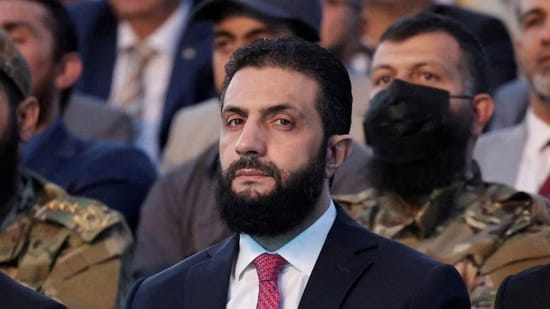
Syria’s Interim President Ahmed al-Sharaa in May 2025 (Reuters)
By: Atlas
Syrian President Ahmed al-Sharaa is scheduled to meet President Donald Trump at the White House, marking the first time a Syrian head of state has been received in Washington since Syria gained independence in 1946. The visit follows the U.S. move, announced days earlier, to remove al-Sharaa from its terrorism blacklist and to clear his interior minister as well, a step that made the encounter diplomatically possible. U.S. officials said the meeting had been in planning since Trump and al-Sharaa first met in Riyadh in May 2025.
Al-Sharaa, who came to power after rebel forces ousted Bashar al-Assad late in 2024, is traveling to Washington as the internationally recognized leader of Syria for the first time. Syrian state media reported his arrival over the weekend and said he would hold side meetings with international financial institutions on Syria’s reconstruction needs before the White House talks. The World Bank has put a conservative estimate on Syria’s rebuilding costs at $216 billion.
U.S. officials have described the visit as “unprecedented” because it brings to Washington a figure who once belonged to jihadist formations but now leads a government Washington is trying to bring into a regional security framework.
From adversary to negotiating partner
Al-Sharaa’s trajectory is central to why the visit is drawing attention. Two decades ago he was detained by U.S. forces in Iraq for fighting with al-Qaeda-linked militants. He later broke with al-Qaeda, went on to lead Hayat Tahrir al-Sham (HTS), and eventually took part in the push that removed Assad. Because of that past, he and HTS were under U.S. and UN sanctions for years. The U.S. delisted HTS in July 2025 and delisted al-Sharaa personally just before this visit, citing moves by his government to find missing Americans, dismantle remaining chemical-weapons capabilities, and act against Islamic State sleeper cells.
Since taking power, al-Sharaa has tried to present his government as a break with Assad-era repression and as a willing partner to states that once backed the Syrian opposition. He has already addressed the UN General Assembly, visited Saudi Arabia, and opened channels to European governments. The Washington stop is the highest-profile element of that normalization campaign and, if successful, will broaden Syria’s access to Western financing and military coordination.
Trump has publicly said he “got along” with al-Sharaa in their earlier meeting and that lifting sanctions was meant to “give them a fighting shot.” That statement signaled to Congress and to U.S. allies that the White House was prepared to deal with the new Syrian leadership on pragmatic grounds despite its past.
Agenda for the talks
Both sides have outlined three main items. First is Syria’s formal entry into the U.S.-led coalition against the Islamic State group. Although Syrian forces have already been conducting raids against IS cells in Aleppo, Idlib, Hama, Homs, Deir ez-Zor, Raqqa, and Damascus, the U.S. wants a signed framework that will let American forces coordinate more directly with Syrian units. U.S. envoy Tom Barrack said earlier this month that the signing could occur during the visit.
Second is sanctions relief. Al-Sharaa is expected to argue for a full repeal of the Caesar Act, the Assad-era law that still discourages international companies from investing in Syria. At present the act is only waived by presidential order; eliminating it altogether would require Congress. Some lawmakers in both parties want to attach conditions related to minority protection, Syria-Israel security arrangements, and the removal of foreign fighters from Syrian institutions. That means any commitment Trump offers in the Oval Office will still need legislative follow-through.
Third is security architecture. Diplomats in Damascus have said Washington intends to establish a military presence near the Syrian capital to coordinate humanitarian aid and monitor the evolving line between Syria and Israel. Syrian officials have publicly denied that such a base is imminent, but they have not ruled out broader security cooperation. The White House meeting gives both presidents a venue to state what each side is prepared to host or fund.
Points of friction
Despite the symbolic nature of the visit, there are unresolved issues. Some U.S. lawmakers and advocacy groups have urged Trump to raise recent sectarian attacks inside Syria and to demand accountability for gunmen aligned with the new government. They argue that lifting broad sanctions before those cases are resolved would remove leverage. Similar concerns are being voiced about the safety of Alawite and Druze communities, and about whether Damascus will open humanitarian corridors in the south. Those questions are likely to surface in readouts or in follow-on congressional hearings.
There is also the matter of Israel. Since Assad’s fall, Israel has moved to secure a demilitarized zone south of Damascus and to formalize control over areas once patrolled by the UN. The U.S. wants Syria to accept arrangements that reduce the risk of cross-border incidents. Al-Sharaa has said he wants “peaceful relations” with neighboring states but has not yet detailed what concessions he is prepared to make. That leaves a gap between what Washington says is needed and what Damascus has so far promised.
Finally, on the U.S. side, congressional skeptics of a full Caesar repeal could slow the economic piece of any agreement. Senate drafters have advanced language rolling back the act, but House Republicans have pushed for conditions. If those conditions are not acceptable to Damascus, the reconstruction and investment part of al-Sharaa’s agenda could stall even after a successful White House meeting.
What the visit signals
Factually, the visit marks several firsts at once: the first Syrian president at the White House since 1946; the first time Washington has hosted a Syrian leader only days after removing him from a terrorism designation; and the first time the U.S. has moved to fold post-Assad Syria directly into the anti-IS coalition. For Trump, it is an opportunity to show progress on counterterrorism and on reducing Iran’s footprint in Syria without a new U.S. combat commitment. For al-Sharaa, it is the clearest signal yet that his government is no longer treated in Washington as a pariah state.
Next steps will depend on what is signed in Washington. If the coalition agreement is finalized and if the administration transmits Caesar-repeal language to Congress quickly, the visit will be remembered as the turning point that moved Syria from isolation to structured engagement with the United States. If follow-through lags, the meeting will still stand as a symbolic milestone but with fewer material outcomes. In either case, the fact that the visit is taking place at all reflects a changed U.S. assessment of Syria’s leadership after the fall of Assad.

Subscribe to Table Stakes to read the rest.
Every Monday Morning, get a recap of the week’s events from countries on the main stage. Featuring news & analysis into new policy, military affairs, and international relations on the worlds stage.
Already a paying subscriber? Sign In.
A subscription gets you:
- • Lifetime Rizz
Reply