- Table Stakes
- Posts
- Table Stakes - November 3rd 2025
Table Stakes - November 3rd 2025

Atlas News
November 03, 2025
Good morning everyone,
I’m Atlas, and welcome to Table Stakes!
Here’s a look at today’s topics:
Trump Threatens Military Action In Nigeria
Xi States That No Action Will Come To Taiwan During Republican’s Term
Mexican Mayor Assassinated By Cartel During Public Celebration
Trump Threatens Military Action In Nigeria
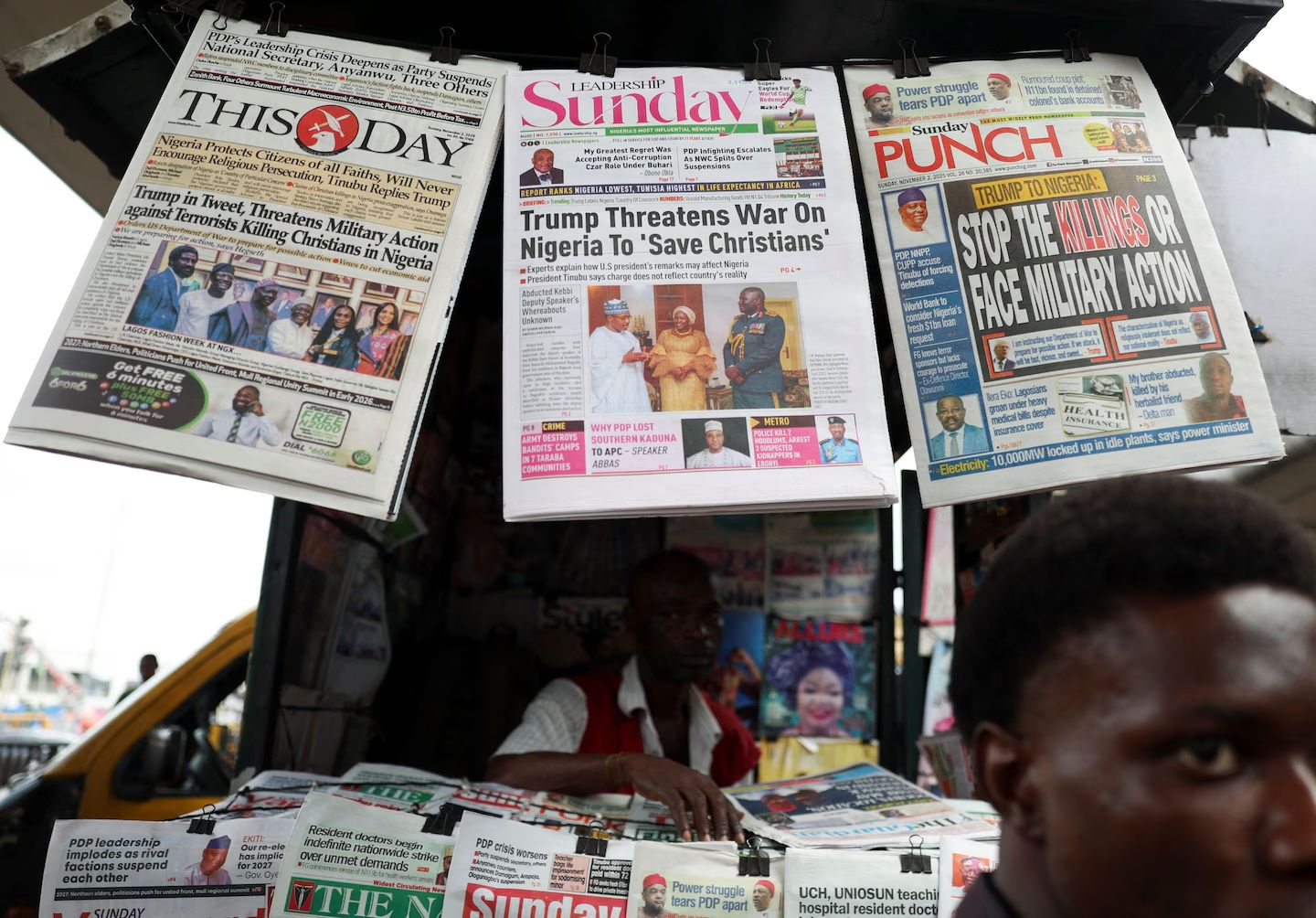
Nigeria newspaper stand in Lagos on November 2nd 2025. (Sodiq Adelakun - Reuters)
By: Atlas
President Donald Trump stated that the United States could take direct action in Nigeria if the Nigerian government does not stop attacks he described as the killing of Christians. He first raised the threat in public remarks and posts over the weekend, pairing the warning with a pledge to halt U.S. assistance to Nigeria.
In follow-up comments to reporters, he said military options remained on the table. When asked whether that included air strikes or troops on the ground, he replied that either was possible. He did not announce a timeline, specify targets, or outline rules of engagement.
The administration also moved to re-list Nigeria as a “country of particular concern” under U.S. religious-freedom law. That designation is a policy step that can be followed by sanctions or other measures at the discretion of the executive branch.
How Nigeria responded
Nigeria’s government rejected the characterization that it tolerates religious persecution. Officials said the state does not sanction attacks on any community and emphasized constitutional protections for freedom of religion.
Presidential spokespeople said Nigeria would consider cooperation against terrorist groups, provided any assistance respects national sovereignty and is coordinated through official channels. They added that the government continues to conduct operations against armed groups and has increased deployments in areas experiencing repeated violence.
Officials also argued that insecurity in affected regions has multiple drivers—insurgent activity, banditry, and local disputes—and that both Muslims and Christians have been among the victims. They urged outside partners to avoid framing the situation in a way that obscures those distinctions.
Security context and factual baseline
Nigeria’s security environment features overlapping threats. In the northeast, Boko Haram and Islamic State West Africa Province have carried out attacks for more than a decade. In parts of the northwest and north-central states, criminal bands and communal conflicts contribute to recurring violence. Casualty figures vary by incident and location, and attribution can be complex when attacks occur in remote areas.
Religious identity is a prominent feature of public discussion, but incident data show that targeting often follows geography and group control as much as sectarian lines. Churches, mosques, markets, and villages have all been struck in recent years. Security forces conduct operations across several states and periodically announce arrests, rescues, and seizures of weapons.
Against that backdrop, U.S. statements focused on the safety of Christian communities and on the Nigerian state’s responsibility to protect civilians. Nigerian officials responded that they are increasing pressure on armed groups and that assistance aimed at intelligence, training, and equipment would be more constructive than unilateral action.
Policy tools and process on the U.S. side
A “country of particular concern” designation triggers reporting requirements and allows the administration to consider measures that range from targeted sanctions to restrictions on certain aid lines. Humanitarian assistance is commonly exempted, but other categories can be conditioned or paused.
Any military option would pass through established interagency steps. Those include legal review, consultations with congressional leaders, and diplomatic engagement with Nigeria on access, deconfliction, and civilian-protection standards. In practice, U.S. counterterrorism involvement in Africa has typically emphasized intelligence support, advising, limited strikes, and partner-enabled operations rather than large-scale deployments.
If the administration intends to change assistance levels, departments would issue guidance to implementing partners and notify Congress of reprogramming decisions. Timelines for these steps depend on the scope of the measures and the need to avoid disrupting life-saving programs that operate continuously in high-need areas.
What to watch next
First, look for formal directives that translate public statements into policy. Written guidance to the Defense Department, notices to Congress regarding potential aid changes, or the publication of a Federal Register determination on the religious-freedom designation would indicate how the administration is sequencing actions.
Second, watch for bilateral contacts at senior levels. Readouts of calls or meetings between U.S. and Nigerian officials will show whether the two governments are moving toward a cooperative framework focused on specific armed groups, intelligence sharing, and training, or whether disagreements about rhetoric and sovereignty remain the dominant theme.
Third, monitor security reporting from affected regions. Official communiqués on operations against Boko Haram, Islamic State West Africa Province, and criminal networks—along with verified accounts of attacks on civilians—will shape the factual discussion. Announcements on troop rotations, arrests, or interdictions can serve as indicators of state activity and areas of emphasis.
Fourth, observe any adjustments to U.S. aid posture. Statements clarifying which assistance lines are paused, maintained, or exempted will determine the immediate impact on programs in health, food security, and stabilization. If the administration conditions certain categories of aid, agencies will outline compliance criteria and timelines.
Finally, note regional and multilateral responses. Comments from the African Union, ECOWAS, and key partners can affect diplomatic space for both governments. Engagement through these forums may provide mechanisms for coordination that address sovereignty while strengthening efforts against armed groups.

Subscribe to Table Stakes to read the rest.
Every Monday Morning, get a recap of the week’s events from countries on the main stage. Featuring news & analysis into new policy, military affairs, and international relations on the worlds stage.
Already a paying subscriber? Sign In.
A subscription gets you:
- • Lifetime Rizz
Reply