- Table Stakes
- Posts
- Table Stakes - October 27th
Table Stakes - October 27th

Atlas News
October 27, 2025
Good morning everyone,
I’m Atlas, and welcome to Table Stakes!
Here’s a look at today’s topics:
Trump Secures Series Of Mineral Deals In Asia Tour
Milei Wins Big In Argentina Midterms
Analysis: Trump's Stance On Putin’s Defiance Of New US Sanctions On Russia
Trump Secures Series Of Mineral Deals In Asia Tour
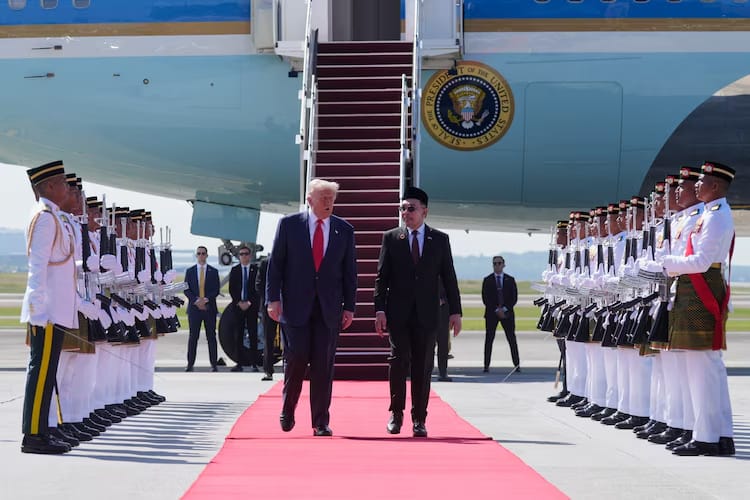
President Donald Trump walks with Malaysia's Prime Minister Anwar Ibrahim in Sepang, Malaysia, Sunday, Oct. 26, 2025.
By: Atlas
President Donald Trump used a multi-nation swing through Asia to announce a cluster of agreements aimed at trade access and critical minerals. The itinerary centered on meetings with leaders from Southeast Asian economies and a series of side-room signings convened around regional summits. Public readouts emphasized two tracks: maintaining existing tariff structures on a wide set of imports while opening partner markets to U.S. industrial and agricultural goods, and establishing cooperation frameworks on the mining, processing, and export of rare earths and other critical minerals used in electronics, electric vehicles, and defense systems. The White House presented the package as an effort to diversify supply chains amid tighter export controls from Beijing and a global scramble for alternative processing capacity.
What the Agreements Do
The trade components knit together commitments on tariff and non-tariff barriers. Partner governments outlined plans to reduce or eliminate import duties on a broad range of U.S. products, including machinery, chemicals, and food and agriculture. In parallel, the United States signaled it would hold its prevailing tariff rates on most goods coming from these partners, with some carve-outs for targeted categories subject to separate negotiations. Separate memoranda covered regulatory streamlining—particularly for certifications affecting pharmaceuticals, cosmetics, and halal-sensitive categories—in order to speed product entry and reduce duplicative testing. Customs cooperation and labor and environmental provisions were included to support enforcement and align standards.
On critical minerals, the documents establish government-to-government working groups to map deposits, review licensing regimes, and identify projects suitable for U.S. private investment. The texts reference rare earths, nickel, cobalt, and other inputs essential to permanent magnets, batteries, semiconductor manufacturing, and military equipment. Partners pledged not to impose discriminatory export bans or quotas directed at U.S. buyers, subject to domestic law. Several statements point to joint feasibility studies on processing plants and to facilitating long-term offtake agreements with U.S. manufacturers. While the agreements do not themselves fund mines or refineries, they set timelines for technical consultations, project shortlists, and permitting milestones, and they instruct export-credit and development finance institutions to prioritize bankable proposals that emerge from this process.
Why the Minerals Track Matters
The minerals language responds to two practical problems: concentration of processing capacity and policy volatility. For more than a decade, most rare earth and magnet processing has been centered in China, even when ore is mined elsewhere. When export licenses, technology controls, or environmental rules in one jurisdiction change suddenly, it can ripple through industries ranging from wind turbines to fighter jets. By encouraging alternative processing hubs in Southeast Asia and by clarifying partners’ export policies toward the United States, the agreements attempt to blunt those shocks. In the near term, the likely effect is contractual rather than physical: companies can negotiate offtake tied to policy assurances and begin pre-engineering on facilities with clearer regulatory expectations.
Even incremental progress can alter procurement risk. If a partner commits to maintain access for concentrates and intermediate materials while permitting a refinery under international standards, downstream manufacturers are more willing to sign multi-year take-or-pay contracts that underpin financing. The result is a path—still contingent on permitting, local acceptance, and commercial viability—toward processing capacity that is not exposed to a single point of failure. The agreements also point to training and exchange programs to bolster a technical workforce, as well as environmental baselines aligned with international norms, which are necessary for long-lived assets in sensitive communities.
Market, Supply Chain, and Policy Implications
For markets, the announcements do not immediately change physical supply but they can shift expectations. Equipment makers and defense contractors tracking magnet metals, heavy rare earths, and battery inputs will factor the prospect of additional Southeast Asian processing into multi-year sourcing plans. If follow-on steps—feasibility studies, pilot plants, and financing—remain on schedule, purchasing managers may diversify away from single-supplier dependencies earlier than they otherwise would. Traders will watch for any corresponding adjustments to export rules in China or for changes to domestic mining policies in partner countries as ministries translate joint statements into administrative guidance.
For supply chains, the agreements are designed to link upstream resources with midstream processing and downstream demand under clearer rules. One expected outcome is more structured public-private engagement: project developers approach government working groups with proposals; governments help align permits, infrastructure, and finance; buyers provide demand signals through preliminary offtake terms. Parallel U.S. actions—such as Defense Production Act authorities, grant programs, or long-term procurement—could reinforce the commercial case if agencies decide specific materials are essential to national security or industrial policy goals.
For policy, the minerals track intersects with tariff and non-tariff measures. The trade side of the package keeps leverage in place while offering partners expanded access for U.S. goods. That combination is meant to support domestic constituencies at home (manufacturing, agriculture) while giving partners incentives to deepen economic ties with the United States even as they maintain commercial links with China, Japan, Korea, and others. Implementation will require routine interagency work: customs rulings, regulatory alignments, country-of-origin determinations, and dispute-avoidance mechanisms to address frictions before they escalate.
What Comes Next
The follow-through will determine whether these announcements translate into capacity on the ground. Each agreement sets out near-term checkpoints: convening the minerals working groups, delivering initial resource maps and project lists, and launching feasibility studies on specific processing facilities. Development finance and export-credit agencies will review proposals as they mature; private capital will look for bankable offtake terms and clear permitting paths. On the trade side, partners have indicated timelines to publish tariff schedules, adjust customs codes, and implement regulatory streamlining commitments. In legislative channels, some elements may be notified to Congress or require consultation with relevant committees, depending on the authority used. Regionally, the United States and partner governments are expected to brief other summit participants on how these arrangements interact with broader economic frameworks in the Indo-Pacific.
Whether the minerals agenda proceeds on schedule will hinge on practical questions: access to power and water for refineries, environmental impact assessments that meet local and international standards, workforce training for specialized roles, and transport links from mine sites to ports. The agreements anticipate those hurdles by calling out infrastructure coordination and technical assistance, but the pace will vary by project and country. If even a portion of the contemplated capacity comes online within standard development timelines, the result would be a modest but meaningful diversification of critical minerals supply, accompanied by deeper trade ties anchored in clear rules and predictable market access.

Subscribe to Table Stakes to read the rest.
Every Monday Morning, get a recap of the week’s events from countries on the main stage. Featuring news & analysis into new policy, military affairs, and international relations on the worlds stage.
Already a paying subscriber? Sign In.
A subscription gets you:
- • Lifetime Rizz
Reply